How to Spot High Quality Boutique Clothing in 2026
Table of Contents
- Start With the Label: How to Identify High-Quality Fabric
- 7 Signs of Well-Made Clothing to Check Before You Buy
- How to Spot High Quality Boutique Clothing When Shopping Online
- Post-Wash Performance: What Labels and Reviews Reveal
- Best Luxury Boutique Clothing Brands 2026: What Sets Them Apart
- Sustainable Sourcing, Traceability, and Resale Value
- Frequently Asked Questions
Last Updated: September 21, 2026
Start With the Label: How to Identify High-Quality Fabric
You can learn how to spot high quality boutique clothing in about thirty seconds, and it starts at the tag, not the price. Turn the garment inside out and read the fiber content before you look at anything else. That little label tells you more about how a piece will wear than the brand name ever will.

Fiber Content and Fabric Weight
Fabric weight is the single most overlooked spec in boutique clothing. A heavier cotton poplin holds its shape through repeated washing. A thin, flimsy weave wrinkles the moment you sit down and thins out after a few wears.
The Hand Feel Test and Transparency Check
Hand feel is exactly what it sounds like: how the fabric feels against your skin. Rub it between your fingers. Quality fabric feels cool, dense, and smooth, not slick or plasticky.
7 Signs of Well-Made Clothing to Check Before You Buy
Well-made clothing shows its quality in the details, not the label. Run through these seven checks before you commit, whether you are in a store or reading a product page online.
- Seams lie flat with no puckering or loose threads
- Stitching is even and tight, with no skipped sections
- Buttons sit secure and buttonholes are cleanly cut
- Zippers glide without catching or snagging
- Patterns line up at the seams, especially on stripes and prints
- Lining is attached properly and hangs without twisting
- Hems are finished, not raw or fraying
Seams, Stitching, and Reinforcement Points
Stitch density tells you how much care went into construction. Denser stitching usually means a stronger seam that resists pulling. Look closely at stress points: shoulders, armholes, and the crotch of pants. Those areas take the most tension and fail first when construction is cheap.

Buttons, Zippers, and Hardware Quality
Hardware is where budget pieces give themselves away. Plastic buttons feel light and hollow. Better buttons have real weight and a smooth finish. Zipper functionality matters just as much. A zipper that snags on the first try will only get worse.
How to Spot High Quality Boutique Clothing When Shopping Online
Online shopping removes touch, so you have to replace it with reading, and with the right questions. The physical checks from earlier in this guide (fiber content, stitch density, hardware weight) all have a screen-based equivalent. You just have to know where to look.
Translating the Hand-Feel Test to a Screen
You cannot rub fabric through a monitor, but you can read the signals that predict hand feel:
- Fiber blend percentages. A 95/5 cotton-elastane blend behaves very differently from 60/40 cotton-polyester. The first recovers shape; the second resists wrinkles but pills faster.
- Fabric weight numbers. Under about 4 oz/yd², a knit will likely be sheer. Above 8 oz/yd², expect structure and warmth. Mid-weight (5-7 oz/yd²) is the everyday sweet spot.
- Weave or knit type. Poplin, twill, and oxford are woven and hold shape. Jersey and rib are knit and stretch. The listing should say which.
- Finish language. "Garment-dyed," "mercerized," and "peached" are specific treatments with predictable results. "Soft-touch finish" is marketing, not a spec.
Reading Photos Like an Inspector
Zoom in on the photos and look for the same details you would check in person:
- Seam close-ups. Can you see the stitch line? A single-needle seam is cleaner but weaker at stress points; double-needle is stronger. If no photo shows a seam, that is a signal.
- Hem finishing. A blind hem or rolled hem is a deliberate choice. A raw, serged edge on a visible hem is a cost shortcut.
- Pattern matching. On stripes, plaids, or large prints, the pattern should align at the side seams and center front. Misalignment is one of the clearest tells of rushed construction.
- Hardware in context. Zipper pulls, buttons, and rivets should look proportional to the garment. Oversized plastic buttons on a lightweight blouse are a budget cue.
Sizing Consistency and Review Mining
Sizing consistency is the other big question. Read the size chart carefully, and check whether it lists finished garment measurements (the actual dimensions of the garment) or just body measurements. Finished measurements are far more useful because they tell you how the piece will fit, not how you are shaped.
Post-Wash Performance: What Labels and Reviews Reveal
The real test of boutique clothing happens after the first wash, not in the fitting room. Shrinkage, pilling, and color fading all show up in the laundry, and reviews are where shoppers report them honestly.
Best Luxury Boutique Clothing Brands 2026: What Sets Them Apart
The best boutique clothing brands in 2026 share one trait: they tell you where their fabric comes from. Traceability has moved from a niche concern to a baseline expectation. Shoppers want to know the fiber, the mill, and the working conditions behind a piece.
Sustainable Sourcing, Traceability, and Resale Value
Most guides stop at the fitting room. But two of the strongest signals of boutique quality, supply chain transparency and resale value, are things you verify away from the garment itself. Neither is covered well by the standard inspection checklist, and both are where the smartest shoppers separate real boutiques from fast-fashion lookalikes.
How to Vet a Brand's Sustainability Claims
Traceability is the practice of documenting where a garment's materials come from and how it was made. The problem is that "sustainable" and "ethical" are unregulated marketing words in apparel. Anyone can print them on a hangtag. What you can verify are specific, third-party certifications and disclosures.
- Fiber certifications. Global Organic Textile Standard (GOTS) covers organic fiber content and processing. OEKO-TEX Standard 100 certifies that a finished textile has been tested for harmful substances (OEKO-TEX® STANDARD 100). Both are searchable in public certification databases.
- Supply chain disclosures. A serious brand can usually name its mill, its factory, and the country of each stage. If the answer is only "ethically made," that is not a disclosure, it is a slogan.
- Fiber origin claims. "Organic cotton" without a certification number is a claim, not a fact. Certified organic cotton carries a traceable chain-of-custody number.
Why Resale Value Is a Quality Signal
Resale value is a quiet but reliable quality signal. Garments with strong construction and timeless design resell well, while fast-fashion pieces rarely do. If a piece holds its shape, color, and stitching after years of wear, someone else will want it, and that demand shows up in resale listings.
Digital Tools That Verify Quality Claims
A few practical tools make this easier than it used to be:
- Certification lookup databases. GOTS and OEKO-TEX both maintain public search tools where you can confirm a brand's certification is current, not expired.
- Resale platform search. Use it as a real-time quality signal, as described above.
- Care and fiber databases. The FTC's guidance on textile labeling sets the rules for what fiber content claims must disclose, which is why reading the label is worth your time, and why a brand that hides its fiber content is telling you something.
Frequently Asked Questions
How can I tell if boutique clothing is high quality without touching it?
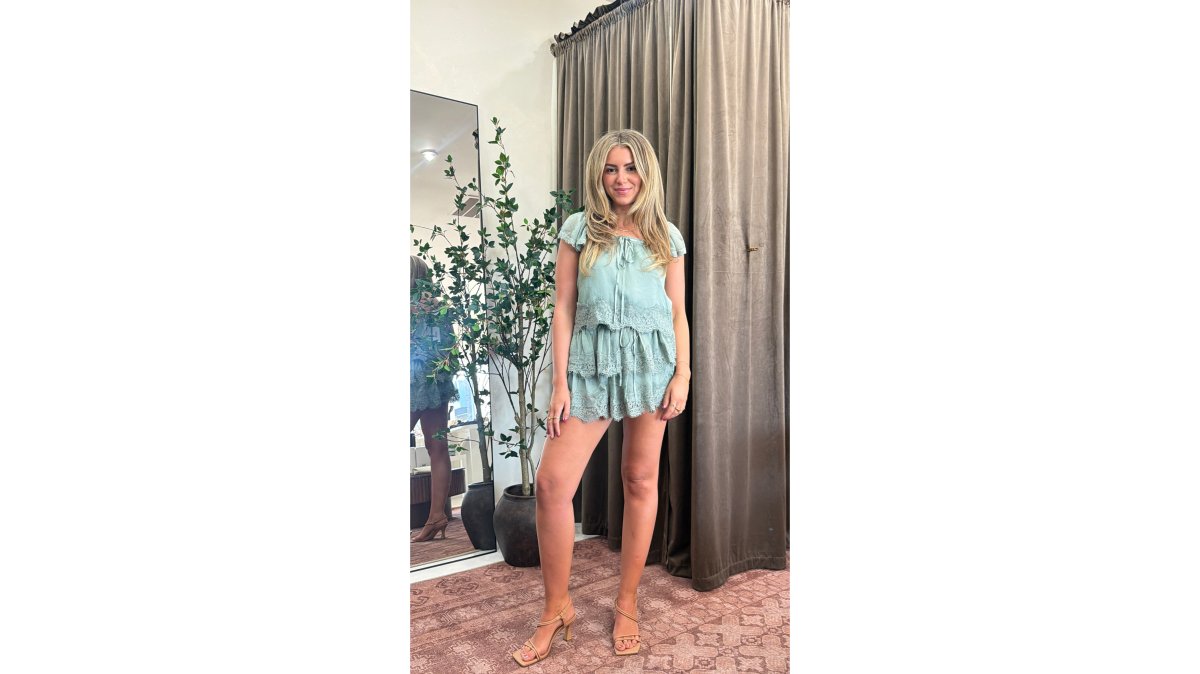
Zoom in on product photos to check stitch density, seam alignment, and pattern matching at the seams. Read the fiber content: natural fibers like cotton, silk, and linen or high-quality blends usually outperform cheap synthetics. Look for details like reinforced buttonholes, lined interiors, and clean hem finishing. If a boutique lists fabric weight, care instructions, and construction details, that transparency is a good sign. Southe, for example, describes the Camille Sage Lace Cap Sleeve Top as lightweight 100% polyester lace with a scalloped edge, giving you specifics to evaluate before buying.
What are the signs of well-made clothing that last beyond a few washes?
Start with the seams: high-quality garments use tight, consistent stitching with no loose threads or skipped stitches. Check that patterns match at the seams, especially on stripes or prints. Look for reinforcement at stress points like shoulders, armholes, and pocket openings. Hardware should feel solid, not flimsy. Fabric should have some weight and recover its shape when stretched. Care instructions matter too: garments that require gentle washing or dry cleaning often use finer materials that need more care but hold up longer with proper handling.
Are boutique items always higher quality than mass-market brands?
Not automatically. Boutique pricing reflects curation, smaller production runs, and often better materials, but quality varies. The difference is that a good boutique does the vetting for you. Look for specifics in product descriptions: fabric weight, fiber content, construction details, and care instructions. A boutique that names its manufacturers or describes its sourcing is more accountable than one that stays vague. Southe, for instance, prices tops between $44 and $65 and describes materials and construction, so you can judge whether the quality justifies the price.
How does stitching quality indicate garment longevity?
Stitch density is one of the most reliable indicators. Higher stitches per inch (usually 8 to 12 on quality garments) mean stronger seams that resist pulling apart. Check for consistent tension: uneven stitches signal rushed production. Seam allowance, the fabric between the stitch line and the raw edge, should be wide enough to prevent fraying. Look for finishing techniques like French seams or serged edges on the inside. If the interior looks as clean as the exterior, the garment was made with care and will likely last through repeated wear and washing.
Sizing, fabric, and construction questions are the ones that keep shoppers from buying online. Southe answers them up front with in-house curation, detailed product descriptions, and a tight edit of elevated essentials under $150. Join the Southe Circle for first access to new collections, and shop all to find pieces built to last.