Shop Elevated Essentials for Women 2026: Fall Staples
Table of Contents
- Why Elevated Essentials Are the Smartest Purchase You'll Make in 2026
- Fall 2026 Color Trends: Brown, Blue, Red, and Wine
- Styling Brown and Blue Outfits: The Unexpected Pairing That Works
- How to Build a Capsule Wardrobe Around Elevated Essentials
- The 3-3-3 Rule: A Simple Framework for a Versatile Wardrobe
- Layering Pieces That Earn Their Place: Cardigans, Tanks, and Knit Sets
- Cost-Per-Wear: Why Quality Beats Quantity Every Time
- Care and Maintenance for Your Elevated Essentials
- Frequently Asked Questions
Last Updated: September 15, 2026
Why Elevated Essentials Are the Smartest Purchase You'll Make in 2026
The most useful wardrobe decision you can make this fall isn't adding more clothes. It's replacing the filler with elevated essentials.
That's the shift happening in 2026. Women are buying fewer, better pieces and wearing them far more often. Elevated essentials are the foundation pieces that work across seasons, occasions, and the rest of your closet, chosen for fit and fabric rather than novelty. This guide covers the colors driving fall 2026, the pairings worth trying, and how to build a capsule wardrobe that holds up past November.
Below, we'll show you exactly which pieces earn their place, what they cost, and how to care for them so they last.
Fall 2026 Color Trends: Brown, Blue, Red, and Wine
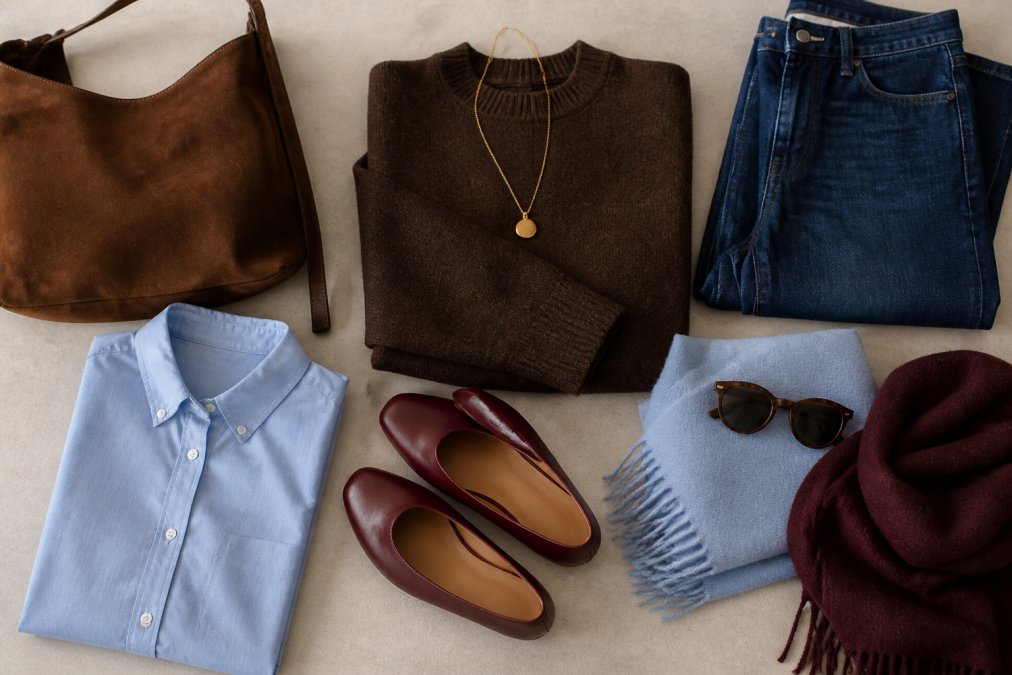
Brown is the anchor color of fall 2026, and it's the one to build around. Designers and stylists have leaned into warm earth tones as the new neutral, and brown now does the job black used to do, with more warmth and less severity.
The supporting palette is where it gets interesting:
- Brown in every depth, from camel to deep chocolate and olive-brown
- Blue in navy, denim, and mid-blue, the calm counterweight to all that warmth
- Red as an accent, worn in small doses on knits, bags, and shoes
- Wine for evening, in satin, velvet, and fine-gauge knitwear
A neutral palette of brown, cream, and navy makes almost everything interchangeable. Add red or wine as the one piece people remember. The Pantone Color Institute's seasonal color reporting is a useful reference point for how these shades get named and interpreted each season.
Styling Brown and Blue Outfits: The Unexpected Pairing That Works
Brown and blue is the pairing most people avoid and the one stylists keep reaching for. The reason is contrast: warm brown against cool blue reads intentional, while brown-on-brown can flatten.
Three combinations that work every time:
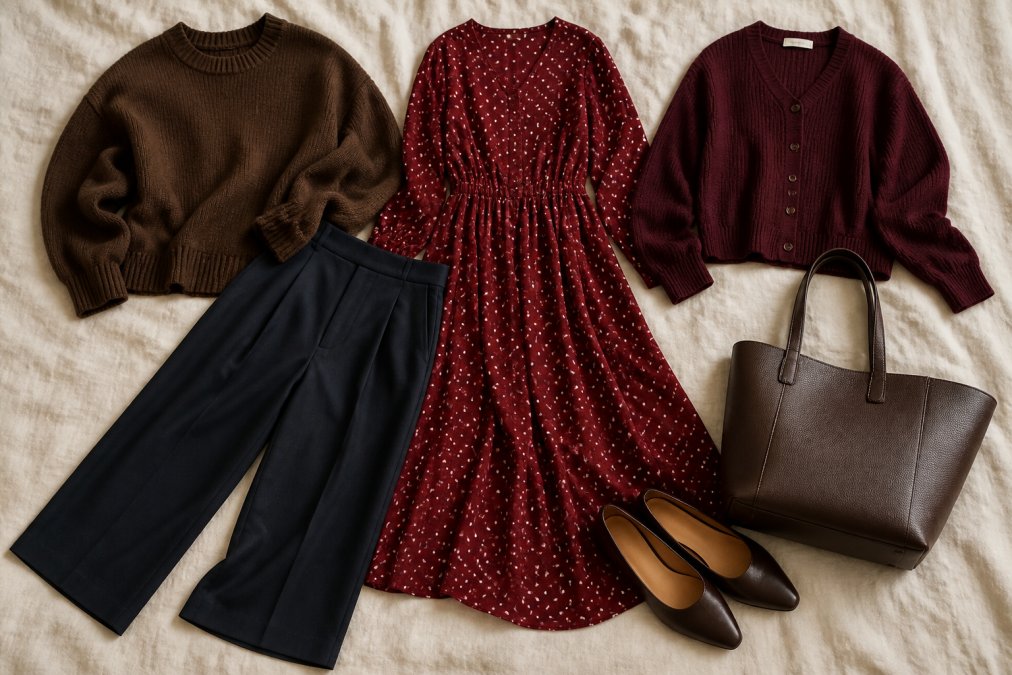
- Chocolate brown knit over navy wide-leg trousers. Grounded, office-ready, and comfortable enough for a long day.
- Camel or olive sweater with mid-blue denim. The easiest weekend formula in this palette.
- Brown outerwear over a blue base layer. Let the coat do the talking and keep everything underneath simple.
The trick is proportion. Keep one color dominant and let the other support it. A brown sweater with a thin navy stripe, like the Carlyle Everyday Crew Neck Sweater in Basil or Dune, does this automatically because the stripe carries both colors at once.

How to Build a Capsule Wardrobe Around Elevated Essentials
Building a capsule wardrobe around elevated essentials means choosing a small set of pieces that all work with each other, then buying nothing that doesn't fit the set. Most capsules land between 20 and 35 pieces including shoes, but the number matters less than whether every piece earns its place.
Start with the pieces you already reach for, then fill the gaps. A practical sequence for fall 2026:
- Base layer: two or three tanks and tees in cream, navy, or brown
- Knitwear: two cardigans and two sweaters, at least one in brown and one in wine
- Bottoms: straight-leg denim, wide-leg trousers, one knit pant
- Outerwear: a tailored blazer and a trench or wool coat
- Shoes: a flat, a boot, and one heel
- Accents: one red or wine piece, one structured bag
The test for any new purchase: does it work with at least three things you already own? If not, it's a one-outfit piece, and those are what fill closets without getting worn. The Ellen MacArthur Foundation's work on textile waste makes the case for buying less and wearing longer better than any styling guide can.
Tailoring the Capsule to Your Frame
Most capsule guides assume one body. That's the gap worth closing, because the same twelve pieces behave differently depending on height and proportion.
- Petite frames (under 5'4"): Keep the brown and blue pieces in the same tonal depth so the eye doesn't break the vertical line. A camel sweater over navy wide-leg trousers works better than chocolate over mid-blue, because the contrast is softer. Crop the knit pant to ankle length and choose a flat or low boot rather than a heel that shortens the leg line.
- Tall frames (5'9" and up): You can carry the boldest fall 2026 pairing, deep chocolate brown against bright red, without the outfit reading as costume. Lean into longline outerwear and full-length wide-leg trousers; the wine accent piece can be a maxi skirt or a long cardigan rather than a small bag.
- Plus-size frames: Proportion is the lever, not coverage. A structured brown blazer over a wine base layer creates a vertical column that reads intentional. Choose knits with a defined shoulder and a straight, not clingy, body. A mid-blue denim with a high rise and a straight leg balances a fuller knit on top.
A Realistic Starting Count
If you're rebuilding from scratch, a workable fall 2026 capsule is roughly: 3 base layers, 4 knits, 3 bottoms, 2 outerwear pieces, 3 pairs of shoes, and 2 accents. That's 17 pieces, and it covers a full week of outfits without repeating a head-to-toe look. Add the red or wine accent last, it's the piece that makes the rest feel styled rather than assembled.
The 3-3-3 Rule: A Simple Framework for a Versatile Wardrobe
The 3-3-3 rule is a capsule-building framework: three colors, three silhouettes, three shoe heights. Every piece you buy must fit inside all three categories. It's simple on purpose, the value is in what it forces you to skip.
Here's how it plays out for fall 2026:
| Category | Your Three | Why It Matters |
|---|---|---|
| Colors | Brown, navy, cream | Everything mixes without clashing; red and wine enter as accents, not anchors |
| Silhouettes | Fitted, straight, oversized | Covers every occasion type from office to weekend |
| Shoe heights | Flat, mid, heel | Handles day through evening without a shoe change |
Why it works: it removes the guesswork. When you're standing in a fitting room, you're not asking whether something is nice. You're asking whether it fits the three. If it doesn't, it stays on the rack.
The framework also prevents the most common capsule mistake, which is buying five versions of the same silhouette because that's what you feel comfortable in. Variety in shape is what makes a small wardrobe feel large.
Applying the Rule to Fall 2026 Colors
The three-color rule doesn't mean you can only own three colors. It means three anchors. Brown, navy, and cream are the anchors this season; red and wine are accents that sit on top of them. A wine cardigan over a cream base and brown trousers uses four colors but only three anchors, so it still reads as a system rather than a collection.
This is also why brown works so well as the anchor. It pairs with navy without the harshness of black, and it makes both red and wine look richer than they do against gray. If you're deciding between a brown and a black version of the same piece this fall, the brown one will do more work in your closet.
Where the Rule Breaks Down
The 3-3-3 rule is a starting framework, not a law. Two situations where it's worth bending:
- If your work wardrobe is formal, you may need a fourth shoe height, a proper pump, that the three-height rule doesn't account for.
- If you live in a warm climate, the oversized silhouette may be less useful than a second fitted option, since layering season is short.
The point isn't to follow the rule perfectly. It's to have a default answer when you're tempted by a piece that doesn't fit anything you own.
Layering Pieces That Earn Their Place: Cardigans, Tanks, and Knit Sets
Layering pieces are where a capsule wardrobe lives or dies, because they're what you actually adjust throughout the day. The ones worth owning do three jobs: worn alone, worn open, worn under something.
A button-down cardigan is the most flexible piece in this category. The Eloise Button Down Cardigan at $62 works buttoned as a top or open over a tank, in black or cream, and pairs with the matching Eloise High Waisted Sweater Pants at $72 for a full knit set that reads like tailoring and feels like loungewear.


For a lighter layer, the Stargazer Pointelle Cardigan at $58 is a fine-gauge knit with a delicate hand, best over a slim tank. A graphic rib tank underneath adds character to an otherwise quiet outfit.
Cost-Per-Wear: Why Quality Beats Quantity Every Time
Cost-per-wear is the purchase price divided by the number of times you actually wear the item. It's the only number that tells you whether a piece was worth buying.
A $62 cardigan worn twice a week for a fall season works out to a few dollars per wear. A cheaper version that pills after three washes and gets retired costs more per wear, even though it cost less at checkout. That's the whole argument for elevated essentials in one calculation.
Run the math before you buy:
- Estimate how often you'll realistically wear it per month
- Multiply by the months you expect it to stay in rotation
- Divide the price by that total
Anything under a few dollars per wear is a good purchase. Anything you can't imagine wearing twenty times is not, regardless of the discount. The Federal Trade Commission's guidance on textile labeling is worth knowing if you want to check what a garment's fiber content actually tells you before you commit.
Care and Maintenance for Your Elevated Essentials
Care is what separates a piece that lasts three seasons from one that lasts ten. The rules are simple and almost nobody follows them.
- Wash less. Most knits need airing, not washing. Spot clean where you can.
- Turn everything inside out before it goes in the machine to protect the surface.
- Use cold water and a delicate cycle for sweater knits, satin, and velour.
- Dry flat, never hang. Hanging a wet knit stretches the shoulders permanently.
- Store folded, not hung, for anything with weight to it.
- Invest in a fabric shaver. It restores pilled knits in minutes and costs less than replacing one sweater.
Satin and lace need the most attention. Wash them in a mesh bag or by hand, and keep them away from anything with zippers or hooks. Velour should be hung to dry away from direct heat, which flattens the pile.
Get these habits right and a capsule wardrobe stops being a seasonal expense. It becomes a fixed asset you add to once or twice a year.
Frequently Asked Questions
What are the must-have elevated essentials for women in 2026?
Start with a button-down cardigan, high-waisted knit pants, an oversized crew neck sweater, and a satin tank for layering. Add a midi dress that transitions from day to night. These pieces work across seasons and pair with what you already own. Focus on neutral tones like black, cream, and brown, then introduce fall 2026 color trends like wine and blue through accessories or a single statement piece.
How do I style brown and blue outfits without looking mismatched?
Treat brown as your base and blue as your accent. A brown oversized sweater over navy wide-leg pants creates a grounded, sophisticated look. Or try a blue button-down under a brown cardigan. The key is keeping one color dominant and the other as a secondary layer. Textures help too: pair a smooth satin tank with a ribbed knit to add depth without competing colors.
What is the 3-3-3 rule for building a capsule wardrobe?
The 3-3-3 rule means choosing three tops, three bottoms, and three pairs of shoes that all mix and match. This creates nine complete outfits from nine items. For elevated essentials, pick pieces like a cardigan, a satin tank, and a sweater for tops; denim, wide-leg pants, and a midi skirt for bottoms; and flats, boots, and sneakers for footwear. Stick to a neutral palette so everything works together.
Why are elevated essentials considered a sustainable fashion choice?
Elevated essentials are made from higher-quality fabrics and constructed to last longer than fast-fashion alternatives. When you buy fewer, better pieces, you replace them less often, which reduces textile waste. Choosing timeless designs over fleeting trends also means your wardrobe stays relevant for years. Look for natural fibers like cotton, wool, and silk, and follow care instructions to extend each garment's life.
How can I incorporate wine and red tones into my daily outfits?
Start small with accessories: a wine-colored cardigan over a neutral base, or a red polka dot midi dress paired with brown boots. Wine and red work best when balanced with cream, black, or brown. For a subtle approach, try a wine satin tank under a cream button-down cardigan. These tones add warmth to fall 2026 color trends without overwhelming your look.
The hard part of building a wardrobe isn't finding good pieces. It's resisting the ones that don't fit the plan. Southe curates women's fashion and elevated essentials with that discipline in mind, keeping apparel under $150 so a considered wardrobe stays within reach. Shop the fall collection through the Southe Circle for first access to new arrivals, or browse the full range and start with the pieces you'll wear this week. SHOP ALL