Best Luxury Boutique Clothing Brands 2026: Curated Guide
Table of Contents
- What Makes a Luxury Boutique Brand Worth Your Money in 2026
- Quiet Luxury Clothing Brands 2026: Why Restraint Outperforms Logos
- Investment Pieces for a Luxury Wardrobe: What Holds Value Over Time
- How to Identify Authentic Designer Goods and Assess Provenance
- Curated Selection by Aesthetic: Coastal, Evening, and Everyday
- Resale Value and Circularity: The New Measure of a Luxury Purchase
- Frequently Asked Questions
Last Updated: September 13, 2026
What Makes a Luxury Boutique Brand Worth Your Money in 2026
The best luxury boutique clothing brands 2026 aren't defined by logos or price tags; they're defined by construction, textile quality, and whether a piece still looks considered after three seasons. At Southe, we curate around that test.
That distinction matters more than ever. A growing share of luxury shoppers now judge a purchase on cost-per-wear rather than the label inside the collar, according to McKinsey's State of Fashion reporting. The shift has pushed boutiques toward smaller, more deliberate collections and away from the seasonal churn that defined the last decade.
Below, we break down what separates a genuine investment from an expensive mistake, which aesthetics lead in 2026, and how to assess provenance.
Craftsmanship, Textile Quality, and the Atelier Standard
Craftsmanship is the measurable difference between a garment that holds its shape and one that sags by the second wash. Look at seam allowance, lining construction, and grain.
Three checks separate real quality from marketing copy:
- Seam allowance: Generous allowance, usually a centimeter or more, signals a maker expecting the garment to be altered and worn for years.
- Textile hand: Natural fibers like silk, wool, and linen drape with weight. Synthetics often feel flat and reflect light unevenly.
- Finishing: French seams, bound edges, and matched patterns at the shoulder indicate an atelier standard rather than a factory rush.
The atelier model, a small team cutting and finishing in limited runs, produces more consistent sizing than mass production. That consistency is what you're paying for.
How to Build a Luxury Capsule Wardrobe That Actually Works
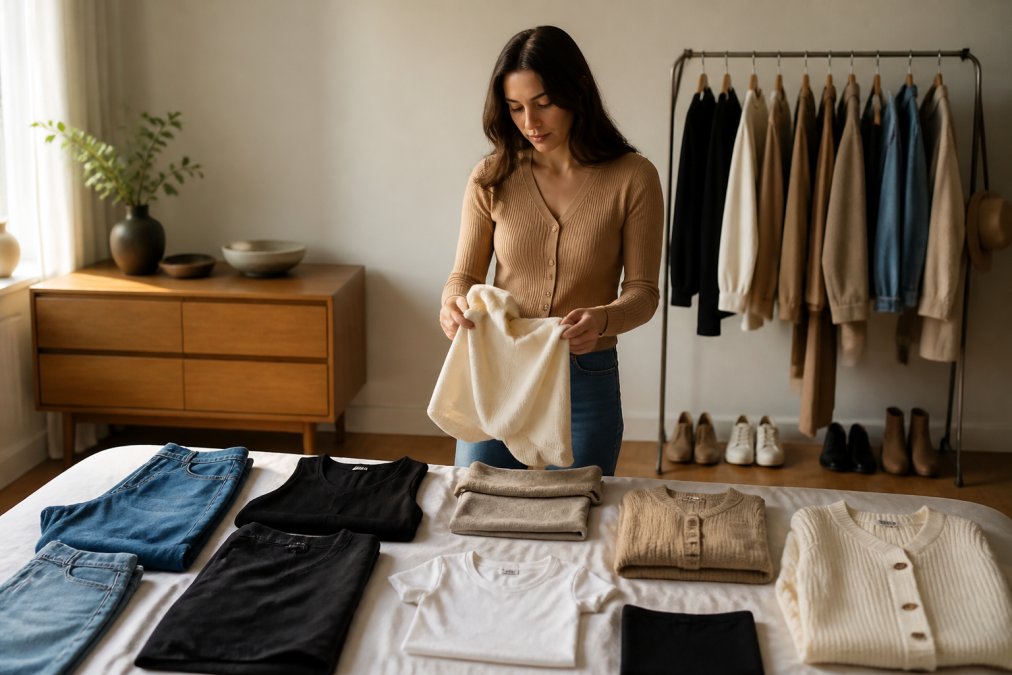
Learning how to build a luxury capsule wardrobe starts with one rule: buy fewer pieces in a palette that talks to itself. A working capsule holds roughly 25 to 35 items, and every piece should pair with at least three others (What Is A Capsule Wardrobe?).
Start with the foundation:
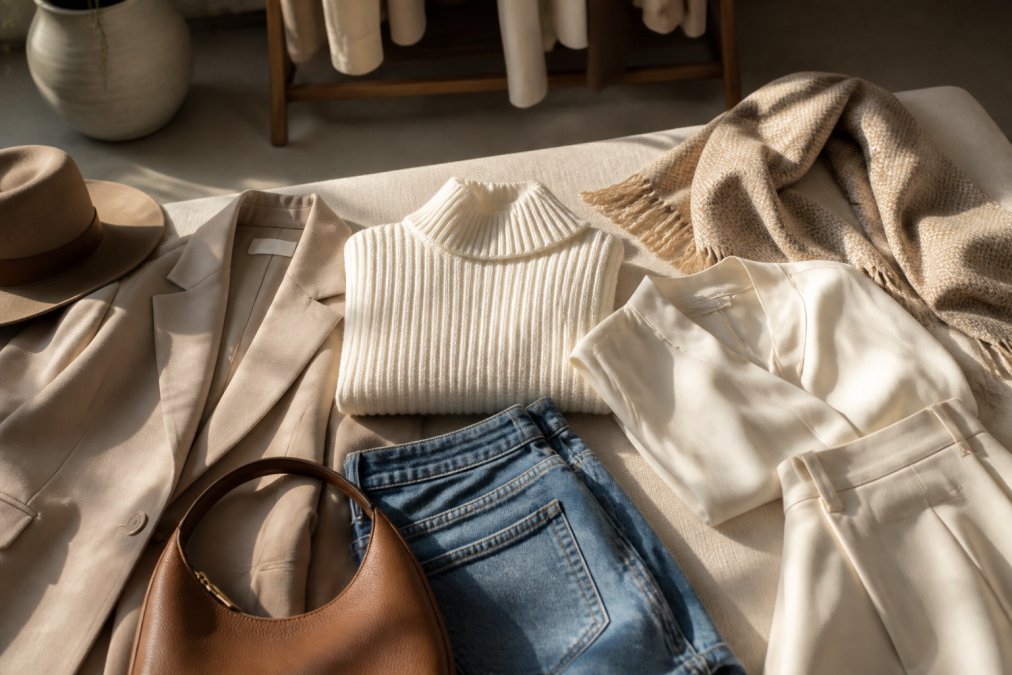
- Neutral base: Two tailored trousers, one midi skirt, one well-cut blazer in navy, camel, or charcoal.
- Textural interest: One satin or silk piece to break up matte fabrics.
- Occasion layer: One dress that works for dinner and one that works for daytime events.
- Footwear and accessories: Two pairs of shoes maximum, chosen for the palette, not the trend cycle.
Quiet Luxury Clothing Brands 2026: Why Restraint Outperforms Logos
Quiet luxury clothing brands 2026 win on repeat wear, not recognition. The aesthetic trades visible branding for cut, fabric, and proportion, surviving trend cycles that wipe out logo-driven collections within a season.
Minimalist Design, Neutral Palettes, and the Timeless Aesthetic
Minimalist design in luxury apparel removes anything that doesn't serve the garment's line: no excess hardware, no competing prints, no decorative stitching that will date. The result is a timeless aesthetic that reads expensive without announcing itself.
Neutral palettes do the heavy lifting. Cream, camel, charcoal, and deep wine sit together without clashing, so one wardrobe covers a workweek, a dinner, and a weekend away.
The trade-off is real: quiet pieces photograph plainly and can feel underwhelming on a hanger, so they earn their keep through fit and fabric rather than visual drama. Try before you commit.
Investment Pieces for a Luxury Wardrobe: What Holds Value Over Time
Investment pieces for a luxury wardrobe share three traits: durable natural fibers, a neutral or classic palette, and no trend-specific detailing. But "outlast" and "hold value" are different claims, and most buying guides conflate them.
Cost-Per-Wear: The Math That Actually Matters
Cost-per-wear is the purchase price divided by the number of times you realistically wear the piece. A $400 tailored wool coat worn 40 times a season for five seasons costs about $2 per wear. A $120 trend-driven jacket worn six times before it dates costs $20 per wear. The cheaper garment is the more expensive one.
Cost-per-wear flips the decision in two situations: outerwear and footwear, where construction quality shows fastest, and occasion wear, where a piece worn twice a year must last a decade to justify its price. Paying more up front is usually rational there.
What Holds Value, and What Doesn't
Here's how the major categories compare on staying power and secondary-market performance:
| Category | Holds Value Best When | Weak Point | Typical Lifespan | Resale Pattern |
|---|---|---|---|---|
| Silk and satin dresses | Neutral or jewel tones, lined bodice | Delicate underarm seams | 5-8 years with care | Moderate; neutrals outperform prints |
| Tailored wool outerwear | Classic cut, full lining | Moth damage in storage | 10+ years | Strongest of the apparel categories |
| Leather accessories | Full-grain, minimal hardware | Strap stretching | 8-12 years | Strong, especially with original packaging |
| Knitwear | Natural fibers, no pilling | Shape loss at cuffs | 3-5 years | Weak; pilling kills value fast |
| Trend-driven statement pieces | Rarely | Dates within two seasons | 1-2 years | Weakest; heavy depreciation |
The pattern is consistent: the plainer the piece, the longer it earns its keep. Heavy trend detailing dates within two seasons regardless of make, and the secondary market prices that in.
The Resale-Value Mechanism
Resale value is a function of three variables: construction quality (does it survive to be resold), documentation (care tags, style numbers, packaging, does a buyer trust it), and demand durability (does anyone want it in five years).
Neutrals in natural fibers score well on all three; trend-driven cuts score on none. A classic camel coat recovers a meaningful share of its original price while a novelty-print dress from the same season recovers little. The gap isn't brand prestige, it's whether the piece was built to be re-bought.
Building the Investment Layer
Build the investment layer first, the coat, the leather bag, the tailored trousers, and let trends sit on top. When a trend cycle ends, the foundation stays intact. Every investment piece should pair with at least three others, the simplest test of whether it belongs.
How to Identify Authentic Designer Goods and Assess Provenance
Provenance is the documented history of a garment: where it was made, by whom, and how it reached the seller. For boutique shoppers, it's the most useful signal of whether a piece is worth its price, and the foundation of resale value.
Start with the label. Genuine luxury labels are woven, not printed, and the stitching attaching them is even and tight. Care tags list fiber content with specific percentages rather than vague terms. On higher-end pieces, check the interior for a date code or style number; a seller who can produce that number on request is signaling a legitimate supply chain.
Then verify the seller. A boutique that publishes its sourcing relationships, names its mills, or explains its buying process gives you provenance; one that only shows product photos does not. Reputable independents name the mill or atelier behind a fabric, a specific Italian or Japanese mill, because that disclosure is a quality claim the seller stands behind.
The Five-Point Authentication Check
Most authenticators work through the same sequence. You can run a version of it yourself before you buy:
- Stitch density and consistency. Genuine luxury construction typically runs 8-12 stitches per inch on visible seams, with even spacing (Analysis of Woven Fabric Mechanical Properties in the Context of Sustainable Clothing...). Counterfeits often show 5-7 stitches per inch and irregular tension.
- Hardware weight and finish. Zippers, buttons, and clasps on authentic pieces have a heft and a uniform finish. Look for brand-consistent engraving on zipper pulls and rivets, not stamped or painted logos.
- Lining and interior finishing. French seams, bound edges, and matched patterns at the shoulder indicate an atelier standard. A serged interior with loose threads is a factory shortcut.
- Label construction. Woven labels with clean, tight attachment stitching; care tags with specific fiber percentages rather than vague terms.
- Date code or style number. Cross-reference it against the brand's own records or a third-party authentication service.
Digital Authentication and Provenance Tools
Digital authentication tools have made this easier. QR-coded tags and blockchain-linked certificates are now common on higher-end pieces, letting you confirm origin before shipping. Third-party services that inspect a garment in hand remain the gold standard for resale, catching details a photo can't show.
For boutique shoppers, ask three questions before you commit: Who made this? What is it made of? Can you show me the documentation? A seller who answers all three is giving you provenance; one who answers none is asking you to take the price tag on faith.
Why Provenance Drives Resale Value
Provenance isn't just a trust exercise, it's a financial one. A piece with documented sourcing, a named atelier, and a verifiable style number holds a meaningful share of its original price on the secondary market; a piece with none is priced on aesthetics alone, and aesthetics date faster than construction. Buyers pay for certainty, and certainty comes from documentation.
This is where circularity enters. Boutiques that take back or resell pieces extend a garment's life and show buyers which items last. Before purchase, ask: does this piece have a resale market, and does the seller support one? Trend-driven cuts and heavy embellishment lose value fastest; neutrals in natural fibers hold up.
Curated Selection by Aesthetic: Coastal, Evening, and Everyday
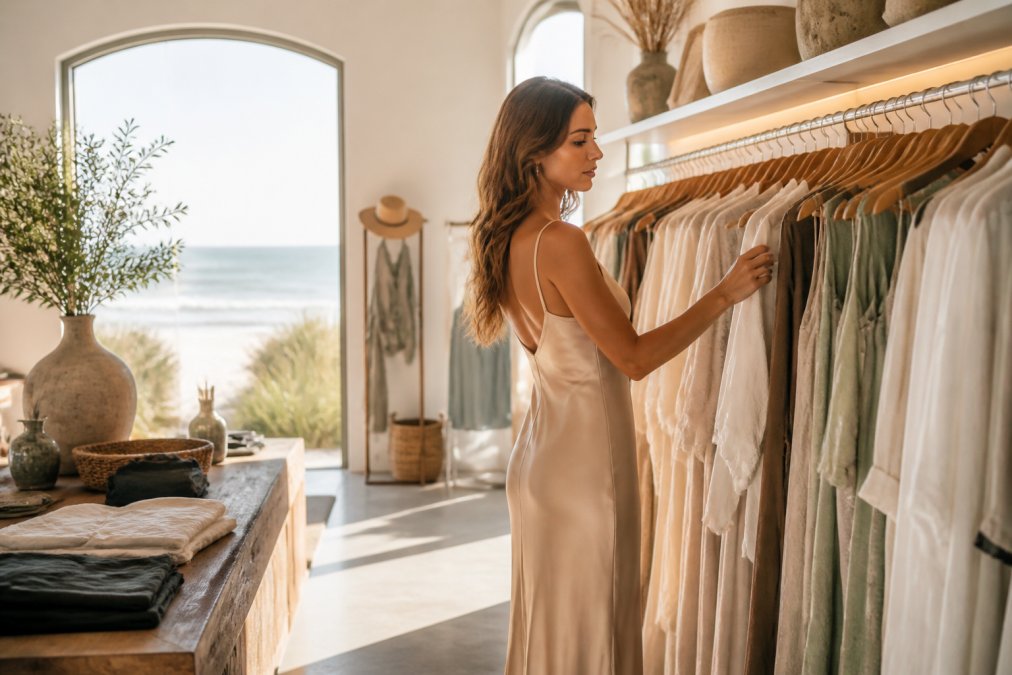
A curated selection works when each piece has a clear job: coastal reads relaxed and textural, evening leans satin and lace, everyday sits in between.
Satin and Lace for Evening: The Dorothy Midi and Catherine Maxi
Evening wear in a coastal wardrobe should feel deliberate without tipping into formal. The Dorothy Midi Dress at $92 does this well: a mixed-media silhouette in deep wine where the fabric shifts between bodice and skirt, so the light never lands the same way twice. It's sleeveless with a clean shoulder and easy through the waist, which makes it the piece for a dinner that starts at seven and runs long.
For something with more sweep, the Catherine Maxi Satin Dress at $134 brings the same satin finish in a longer line. The Charlotte Satin Lace Mini Dress at $72 covers the shorter evening option, with lace adding texture where the satin would otherwise read flat.

Coastal Ease for Day: Mini Dresses and Floral Prints
Daytime coastal dressing lives on lighter fabrics and prints that don't compete with the scenery. The Madeline Floral Mini Dress at $55 is the entry point, and the Kada Mini Halter Dress at $68 handles warmer afternoons with a cleaner neckline.

For longer daytime coverage, the Caroline Maxi Dress at $114 and the Charlie Maxi Dress at $110 both work for lunch or a gallery afternoon. The Kenzie Mini Dress at $83 and Bloom Mini Dress at $98 round out the category for those who prefer a shorter line.

Resale Value and Circularity: The New Measure of a Luxury Purchase
Resale value is now part of the buying decision, not an afterthought: a piece that holds a meaningful share of its original price was almost certainly well made.
Frequently Asked Questions
What are the hottest luxury boutique brands in 2026?
The most sought-after luxury boutique brands in 2026 are those that prioritize quiet luxury, sustainable sourcing, and a curated selection over mass production. Look for labels that release seasonal collections in small batches, use premium materials like silk and satin, and offer a personal styling experience. Southe, for example, curates elevated essentials under $150, making luxury accessible without sacrificing craftsmanship or a timeless aesthetic.
How do boutique luxury brands differ from major fashion houses?
Boutique luxury brands focus on exclusivity, curation, and direct relationships with customers, while major fashion houses rely on global runway trends and mass distribution. A boutique like Southe offers a tightly edited collection of investment pieces, often with limited runs and personal styling support. This means you get unique, high-end pieces that feel more personal and less likely to be seen on everyone else.
How can I tell if a luxury boutique dress is actually high quality?
Check the textile quality and construction details. Look for natural fibers like silk, satin, or cotton, and inspect seams, lining, and finishing. A well-made dress will have consistent stitching, a proper weight, and a label that lists materials and care instructions. Boutique brands that prioritize craftsmanship, like Southe, often provide detailed product descriptions and sizing guidance to help you assess quality before buying.
What are the defining luxury fashion trends for 2026?
The defining trends for 2026 include quiet luxury, minimalist design, and a shift toward investment pieces over seasonal trends. Capsule wardrobes built around neutral palettes and premium materials are replacing logo-heavy styles. Sustainable sourcing and provenance are also top priorities, with shoppers seeking authentic, high-end pieces that hold resale value and reflect a sophisticated, timeless aesthetic.
Why is curated boutique shopping becoming more popular in 2026?
Curated boutique shopping is growing because shoppers want a more personal, edited experience than what large retailers offer. Instead of scrolling through endless options, customers turn to boutiques for a curated selection of wardrobe staples and luxury accessories that match their lifestyle. Exclusive access to new collections, like Southe Circle, and the ability to discover regional boutique brands also drive this trend.