Article: Buy Unique Coastal Home Decor Online: A 2026 Guide

Buy Unique Coastal Home Decor Online: A 2026 Guide
Table of Contents
- Why Buying Unique Coastal Home Decor Online Beats the Big-Box Stores
- Luxury Coastal Interior Design Tips: Materials That Define the Look
- How to Style a Coastal Living Room Without the Clichés
- Curated Coastal Gift Ideas for Women Who Love the Sea
- Sourcing Unique, Artisan-Made Coastal Decor Online
- Budget-Friendly Coastal DIY and Regional Variations
- Frequently Asked Questions
Last Updated: September 28, 2026
Why Buying Unique Coastal Home Decor Online Beats the Big-Box Stores
Walk into any big-box retailer and you will find the same starfish, the same distressed "BEACH" sign, the same mass-produced shells. Buying unique coastal home decor online changes that equation entirely: it puts artisan-made, small-batch pieces within reach, often from makers a national chain would never stock. This guide from Southe, a Newport Beach boutique, explains how to build a collected, sophisticated coastal look without the clichés.
Luxury Coastal Interior Design Tips: Materials That Define the Look
Luxury coastal interior design rests on three material families: natural stone, warm metals, and organic fibers. Get the materials right and the room reads as elevated. Get them wrong and it reads as themed.
Natural Stone and Marble Accents
Marble and natural stone anchor a coastal palette because they carry visual weight without adding color clutter. A polished Calacatta Viola marble piece, with its burgundy veining over a creamy white base, adds a burgundy accent that most coastal rooms lack.

Wood, Brass, and Organic Textures
Wood and brass warm up a palette that can otherwise run cold. A hand-carved wooden accent in a matte black finish adds grain and shadow. An antique brass figurine introduces a patina that deepens over time.
How to Style a Coastal Living Room Without the Clichés
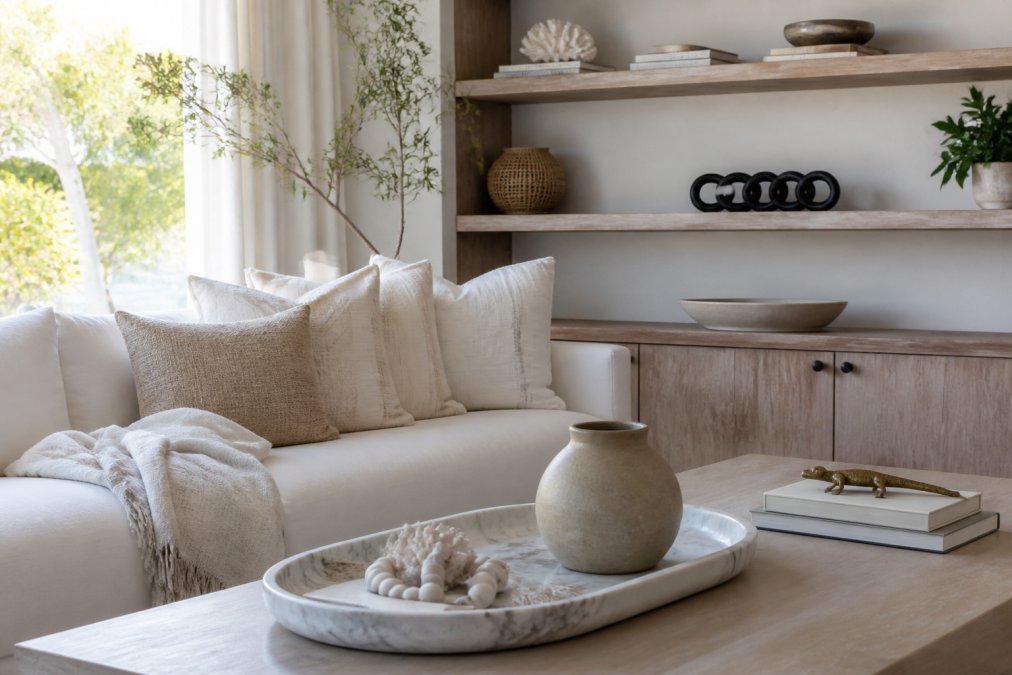
Styling a coastal living room comes down to layering texture over theme. Choose materials that feel seaside without literally depicting the sea. Striped pillows and anchor motifs are optional. Texture is not.
Layering Texture Over Theme
Start with a neutral base: linen upholstery, a jute rug, wood tones in the furniture. Then add three or four textured objects at different scales. A large marble bowl, a small brass accent, and a sculptural wooden piece give you variety without repetition.
The Three-Point Styling Method for Shelves and Consoles
The three-point method is a simple rule for arranging any shelf or console: place one tall object, one medium object, and one low object in a triangle, then repeat the triangle across the surface.
Here is how to apply it:
- Point one: a tall anchor, such as a stack of art books or a decanter
- Point two: a medium sculptural piece, such as a marble bowl or wooden accent
- Point three: a low object, such as a tray or small figurine
- Leave negative space between each triangle so the eye can move
Curated Coastal Gift Ideas for Women Who Love the Sea
Curated coastal gift ideas work best when they double as decor the recipient will actually display. A decorative object beats a novelty item every time, because it earns a permanent spot on a shelf instead of a drawer.

- For the hostess: a marble oval tray for a vanity or entry console
- For the collector: an antique brass figurine with real patina
- For the minimalist: a sculptural wooden accent in a matte finish
- For the entertainer: a glass decanter for wine, infused water, or cocktails
Sourcing Unique, Artisan-Made Coastal Decor Online
Most ranking guides send you to the same handful of mass-market retailers and call it sourcing. The harder, higher-value skill is finding independent makers, small studios, and vintage sellers whose work will not appear on a neighbor's shelf. That is the difference between buying coastal decor and buying unique coastal decor.
Where Independent Coastal Makers Actually Sell
The big-box sites are not where artisan work lives. These channels are:
Polished Calacatta Viola Marble →
- Maker marketplaces. Platforms built around individual studios let you filter by production method, material, and lead time. Look for listings that name the maker and the studio, not just the brand.
- Direct-to-maker storefronts. Many small studios run their own sites and sell through a single channel. These listings tend to include process photos, workshop shots, and honest notes about variation.
- Vintage and estate sellers. One-of-a-kind brass, stone, and wood pieces surface here constantly. A single antique brass figurine with real patina cannot be replicated at scale, which is precisely why it reads as collected.
- Regional guilds and craft councils. State and regional craft organizations maintain member directories of juried makers. Juried status means the work was reviewed by peers, not just uploaded.
- Boutique curators. Small coastal boutiques that buy in limited quantities do the vetting for you. Southe, for example, stocks marble accents, brass figurines, and handcrafted wooden decor in small runs rather than catalog quantities.
How to Vet a Listing Before You Buy
The signals below separate a real maker from a reseller drop-shipping stock photos:
- Named materials. "100% natural Calacatta Viola marble" tells you more than "marble-look." If the listing will not name the quarry, region, or species, assume it is a composite.
- Stated dimensions in both metric and imperial. A 10 in (25 cm) tray is a vanity piece, not a dining table centerpiece. Ambiguous sizing is a red flag.
- Honest variation notes. Handcrafted stone varies in veining. A seller who says so knows the product.
- Small-batch language. "Handmade in small batches" or "made to order" signals real production. "Ships in 24 hours from multiple warehouses" signals the opposite.
- Process evidence. Look for workshop photos, in-progress shots, or a maker bio. Stock renders on a white background tell you nothing about who made the piece.
The Trade-offs Nobody Mentions
Buying artisan online is not frictionless, and pretending otherwise sets you up for disappointment.
- Lead times run longer. Made-to-order pieces can take two to six weeks. If you need a gift by a specific date, confirm the ship window in writing before you pay.
- Returns are often restricted. Many small studios cannot absorb the cost of returns on custom or made-to-order work. Read the policy before checkout, not after.
- Color shifts between screens. Natural stone, brass patina, and hand-dyed fibers read differently on a monitor than in a room. Ask for a photo in daylight if the tone matters.
- Shipping weight matters. Stone and solid brass are heavy. Confirm the shipping method and any freight surcharge on larger pieces.
What Most Guides Miss
Natural variation is a feature, not a defect. Two marble bookends cut from the same block will still differ in pattern. That is how you know the material is real. The same logic applies to hand-thrown ceramics, hand-forged brass, and hand-woven fibers, small inconsistencies are the signature of a human hand, and they are the reason a piece reads as unique rather than manufactured.

Budget-Friendly Coastal DIY and Regional Variations
Budget-friendly coastal decor does not mean cheap materials. It means fewer, better pieces, arranged with intention, plus a few projects you can do yourself. And it means knowing which regional coastal style you are actually building toward, because the same marble bowl reads differently in a weathered New England cottage than in a bright Gulf Coast bungalow.
Regional Coastal Variations: Pick Your Palette Before You Buy
"Coastal" is not one style. It is at least four, and mixing them without intention is what makes a room feel confused rather than collected.
- Northeast / New England. Weathered gray wood, wool throws, aged brass, and muted navy. Think shingled cottages and cold-water light. Heavy textures and matte finishes dominate.
- Gulf Coast / Florida Bright. Bright whites, warm rattan, coral and aqua accents, and lots of gloss. The palette is sun-bleached and high-contrast.
- West Coast / Warm Neutral. Linen, natural stone, warm brass, and soft sand tones. This is the palette most often described as "luxe coastal", restrained, textural, and light on pattern.
- Pacific Northwest Moody. Deep greens, charcoal, blackened wood, and raw stone. Overcast light calls for weight and saturation rather than brightness.
Four DIY Projects That Actually Hold Up
These are the projects that survive past the first season, ranked by effort and payoff.
| Project | Best For | Typical Effort | Where It Works Best |
|---|---|---|---|
| Swap hardware and textiles | Renters, quick refresh | One afternoon | Any region |
| Restyle existing shelves | Anyone with a base collection | Under an hour | Neutral palettes |
| Add one stone or brass accent | Small budgets, big impact | No labor | Warm-neutral rooms |
| DIY driftwood or rope accents | Craft-minded decorators | A weekend | Rustic, weathered looks |
The Repetition Rule
A practical starting point for any budget: pick one material you already own and repeat it in a new finish. Wood becomes black wood. Brass becomes aged brass. Repetition with variation is what makes a room look collected rather than purchased, and it costs nothing to apply.
Frequently Asked Questions
What is the difference between coastal and beachy decor?
Coastal decor focuses on natural materials, muted palettes, and sophisticated textures like marble, linen, and brass. Beachy decor leans into literal nautical themes with anchors, starfish, and bright blues. For a refined look, choose coastal home decor that layers organic materials and artisan pieces rather than themed accessories. This approach keeps your space feeling elevated and timeless instead of seasonal or kitschy.
How can I source unique, artisan-made coastal decor online?
Look for boutiques that clearly describe their sourcing and materials. A polished Calacatta Viola marble bowl at $189 or a handcrafted black wooden chain at $62 signals artisan quality because each piece has natural variation. Avoid listings with generic stock photos. Read product descriptions for details like handcrafted, made to order, or natural stone. These phrases indicate real craftsmanship rather than mass-produced items.
What materials should I look for in high-end coastal home accents?
Natural marble, solid brass, reclaimed wood, linen, and jute are the hallmarks of luxury coastal design. Marble pieces like the Calacatta Viola oval tray at $139 offer weight and veining that synthetic materials cannot replicate. Solid brass develops a patina over time, adding character. Look for materials that age gracefully and feel substantial in hand. These choices elevate a room from temporary trend to lasting investment.
How do you style coastal decor without making it look like a theme park?
Mix coastal accents with neutral, non-themed pieces. Place a marble bowl on a stack of design books, or set a brass lizard figurine beside a ceramic vase. Limit nautical references to one or two items per surface. Use texture, not color, to evoke the sea. A black wooden chain at $62 adds organic shape without shouting beach. The goal is a collected, curated feel rather than a souvenir shop look.