Article: How to Transition Wardrobe Between Seasons
How to Transition Wardrobe Between Seasons
Table of Contents
- Start With a Wardrobe Audit Before You Swap Anything
- How to Layer Clothes for Transitional Weather
- Capsule Wardrobe Essentials That Carry You Across Seasons
- How to Transition Wardrobe Between Seasons With Smart Storage
- Budget-Conscious and Climate-Specific Transition Tips
- Common Mistakes to Avoid When Transitioning Your Wardrobe
- Frequently Asked Questions
Last Updated: September 28, 2026
Start With a Wardrobe Audit Before You Swap Anything
Learning how to transition wardrobe between seasons starts with a full audit, not a shopping spree. Pull everything out, try it on, and sort each piece into keep, store, or donate.
A wardrobe audit is a review of what you own, what fits, and what you actually wore last season. It takes about an hour and saves money.
Here is how to run the audit:
- Empty one category at a time (tops first, then bottoms, then outerwear)
- Try each piece on in front of a mirror
- Sort into three piles: keep, store, donate
- Set aside anything needing repair or tailoring
What to Keep, Store, and Donate
Keep items that fit now, flatter you, and work in at least two outfits. Store heavy coats, thick knits, and summer linens you will not touch for months. Donate anything unworn for a full year.
Be honest about the donate pile.
How to Layer Clothes for Transitional Weather
Layering is the fastest way to handle a 20-degree temperature swing in one day. The trick is three thin layers instead of one heavy one, so you can add or remove as the weather shifts.

The Three-Layer Formula That Works Every Time
The three-layer formula is a base layer, a mid layer, and an outer layer. Each one does a different job.
- Base: breathable fabrics like cotton or a thin knit that sit close to the skin
- Mid: lightweight sweaters, cardigans, or a button-down for warmth
- Outer: a jacket or suede layer you can shed by midday
Capsule Wardrobe Essentials That Carry You Across Seasons
A capsule wardrobe is a small, intentional set of pieces that mix and match across seasons. Most capsules land between 24 and 36 items, and the working rule is that every piece should create at least three distinct outfits with items you already own.
The Math Behind a Capsule That Actually Works
The reason capsules work is combinatorial, not aesthetic. If you own 30 pieces and each one pairs with at least three others, you are not choosing from 30 outfits, you are choosing from hundreds. That is why a capsule feels easier to dress from than a full closet, even though it holds less.
A simple test before any piece earns a spot:
- Can I name three outfits it completes using only pieces I already own?
- Does it work in at least two seasons without alteration?
- Would I wear it once a week in its peak season?
The Transitional Capsule Framework
Build the capsule in four layers, not one flat list:
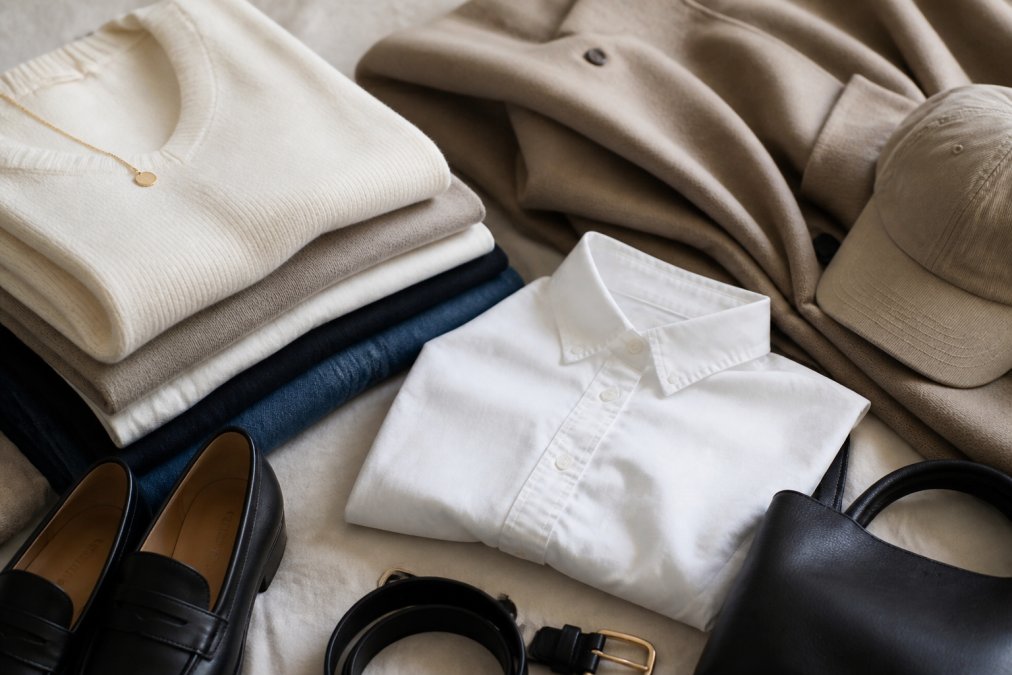
- Foundation (8-10 pieces): classic denim in one dark and one light wash, a white button-down, a plain tee in two neutrals, and one tailored trouser.
- Mid layer (5-7 pieces): two lightweight sweaters, two cardigans, and one button-down you can wear open or closed.
- Outer layer (2-3 pieces): one structured jacket, one suede or leather layer, and one packable shell for rain.
- Accessories and footwear (6-8 pieces): scarves, boot socks, tights, loafers, ankle boots, and clean sneakers.
How to Test a Piece Before You Buy It
The Margot Olive Oversized Suede Jacket is a good example of a capsule anchor. The volumed hem gives it shape, and the olive works over a slim knit and denim or belted over a mini dress, that is two very different silhouettes from one piece. Before adding anything similar, run the three-outfit test above. If you cannot name the outfits on the spot, you are buying a one-look piece.

Men's Transitional Capsule (The Angle Most Guides Skip)
Most capsule advice online is written for women's wardrobes. The same framework applies to men's, with a slightly different piece list:
- Foundation: two pairs of dark denim or chinos, two oxford shirts, two plain tees, one merino crewneck.
- Mid layer: one quarter-zip, one shawl-collar cardigan, one flannel overshirt.
- Outer layer: one unstructured blazer, one field or bomber jacket, one packable rain shell.
- Footwear: one leather boot, one clean sneaker, one loafer.
How to Transition Wardrobe Between Seasons With Smart Storage
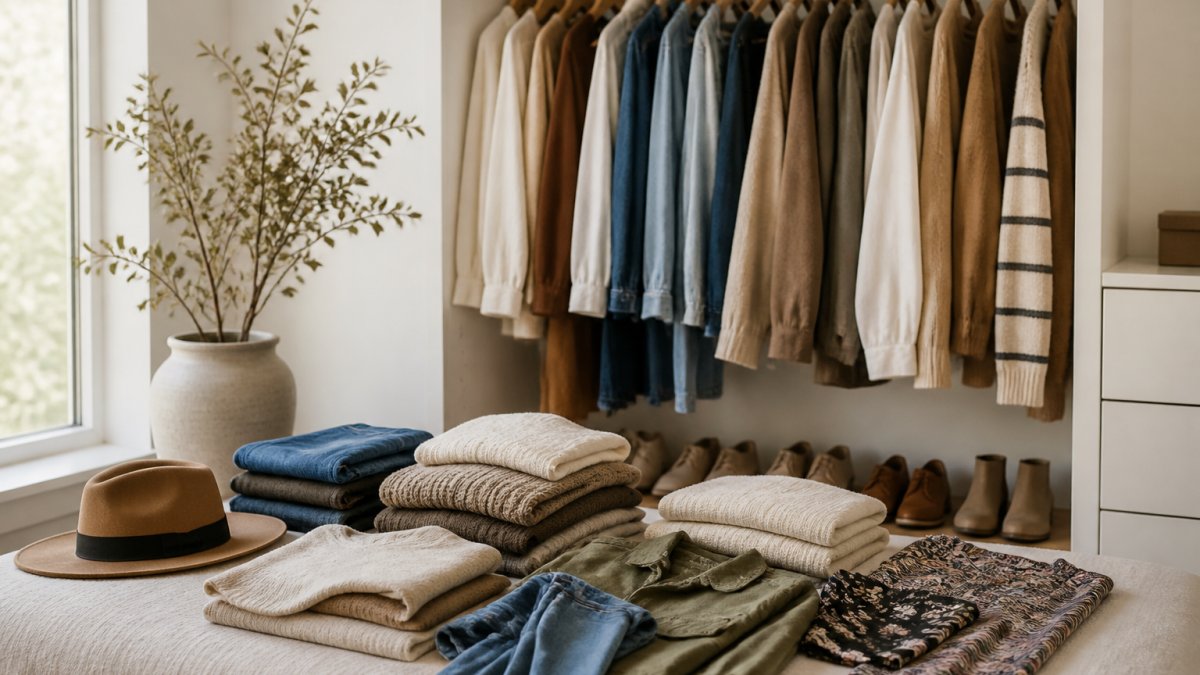
Smart storage protects your off-season pieces so they last. Clean everything before it goes away, store it in breathable containers, and label each bin by season and category.
A simple seasonal closet swap routine:
| Step | Action | Frequency |
|---|---|---|
| 1 | Clean and repair off-season items | Once per season |
| 2 | Store in breathable bins with cedar | Once per season |
| 3 | Label by season and category | Once per season |
| 4 | Rotate current pieces to eye level | Monthly |
| 5 | Review the closet for decluttering | Quarterly |
Budget-Conscious and Climate-Specific Transition Tips
Two things separate a wardrobe that transitions well from one that does not: how much you spend, and where you live. Most guides ignore both. Here is how to handle each.
Shopping Your Own Closet First
Before you buy anything, run a two-hour closet session with three passes:
- The layering pass. Pull every cardigan, overshirt, blazer, and light jacket to the front of the closet. These are your transition tools, and most people already own four or five without realizing it.
- The color pass. Group what is left by color. Neutrals (black, cream, gray, olive, camel, denim blue) do 80% of the transitional work. If a piece is a loud seasonal color, it is a guest piece, wear it now, do not build around it.
- The repair pass. Set aside anything with a missing button, a loose hem, or a small stain. A tailor can usually fix these for less than the cost of one new top, and repaired pieces re-enter rotation immediately.
The One-Piece Rule for Seasonal Spending
If you do buy, cap the season at one or two intentional additions rather than a haul. The test for a worthwhile purchase:
- It works in at least three seasons, not one.
- It pairs with at least five pieces you already own.
- It replaces something worn out rather than adding to a category you already have covered.
Climate Changes the Rules
Generic transition advice assumes a mild, four-season climate. Most of the country does not have one. Adjust like this:
- Humid summers and mild falls (Southeast, Gulf Coast): lightweight cotton and linen stay in rotation longer. Focus on breathable mid layers and a packable rain shell, since afternoon storms are common. Heavy wool is usually overkill until late in the year.
- Dry heat and cool nights (Southwest, high desert): the day-night temperature swing is the real challenge, not the season. A thin base layer plus a light jacket you can shed by mid-morning handles most days. Sun protection doubles as a layer.
- Cold, wet winters (Northeast, Pacific Northwest): layer up sooner and prioritize a water-resistant outer shell over a heavy coat. Wool socks and waterproof boots matter more than a thicker sweater.
- Extreme temperature swings (Mountain West, Midwest shoulder seasons): the three-layer formula is non-negotiable. Keep a packable mid layer in your bag or car from September through November.
Men's Transitional Style, Without the Guesswork
Men's transitional dressing follows the same logic as women's, with a shorter list of pieces doing more work:
- One unstructured jacket (blazer, field jacket, or bomber) covers most of the shoulder season.
- Two or three knit layers, a merino crewneck, a quarter-zip, and a flannel overshirt, handle warmth without bulk.
- Neutral colors (navy, olive, gray, tan) let every layer pair with every other layer.
- One leather boot and one clean sneaker cover nearly all transitional footwear needs.
Common Mistakes to Avoid When Transitioning Your Wardrobe
Most transition mistakes come down to timing and impulse. Here are the ones to watch.
- Swapping too early and packing away layers you still need
- Buying trendy pieces that only work for one season
- Ignoring footwear rotation, then having no transitional shoes
- Storing dirty clothes, which invites moths and stains
- Skipping the wardrobe audit and rebuying what you own
Frequently Asked Questions
What is the 3-3-3 rule for clothes?
The 3-3-3 rule is a packing and wardrobe guideline: three tops, three bottoms, and three pairs of shoes can create up to 27 different outfits. It works well for transitional seasons because it forces you to choose versatile pieces that mix and match. When you transition wardrobe between seasons, applying this rule to your capsule keeps you from overpacking or overbuying. Focus on neutral colors and breathable fabrics so each piece works across temperature swings.
How do you store seasonal clothing without cluttering your space?
Use breathable cotton garment bags or clear under-bed bins for off-season items. Clean everything before storing to prevent moths and odors. Keep a small 'transition bin' with layering pieces like lightweight sweaters, scarves, and tights so you can grab them without digging through deep storage. Rotate your closet seasonally: move out heavy coats and bring forward cardigans and transitional jackets. This keeps your daily wardrobe uncluttered and makes the seasonal swap quick.
How many items should be in a transitional capsule wardrobe?
A transitional capsule typically includes 25 to 35 items, including shoes and accessories. Aim for about 10 tops, 5 bottoms, 3 to 4 layering pieces (cardigans, light jackets), 2 to 3 pairs of shoes, and a few accessories. The exact number depends on your climate and lifestyle. The goal is to have enough variety for unpredictable weather without excess. Choose versatile pieces that can be worn together in multiple combinations.
Are elevated basics worth the investment for seasonal transitions?
Yes, elevated basics often hold up better across seasons because they are made with higher-quality fabrics and construction. A well-made cardigan or suede jacket can be worn from early fall through spring, giving you more cost-per-wear than a cheap alternative that pills or fades. Focus on timeless colors and cuts that layer easily. Southe offers curated elevated essentials under $150, like the Margot Olive Oversized Suede Jacket ($110), designed to transition smoothly between seasons.